Yuno - General knowledge
- 4.7
- Rating
- 100.00K
- Installs
- Free
- Price

 Analysis by App-foxy
I like learning apps that fit into the gaps of a normal day rather than demanding a study session. Yuno takes that approach with short-form audio focused on general knowledge, so I can listen while making breakfast, walking, or doing routine work. It feels closer to a daily mental snack than a traditional course, and that distinction matters when deciding whether it belongs on your phone.
Developed by Gaiali GmbH, this free education app is aimed at curious listeners who want regular exposure to interesting facts and ideas. It has built a strong audience, with over one hundred thousand installs and a 4.7 average from around three thousand ratings. Those figures suggest that its simple concept works for many people, although popularity alone does not make it suitable for every learning goal.
After spending time with it, my view is straightforward: Yuno is best used as a dependable habit for broad curiosity, not as a replacement for a textbook, course, or carefully structured reference source. Its value comes from making learning easy to start and easy to repeat. Its main limitation is the same thing that makes it approachable: short audio can introduce a subject, but it rarely gives enough depth to master one.
You May Also Like

 Blood Strike: 2.5 Anniversary
Blood Strike’s Loadouts Turn Every Drop Into a Tactical Gamble
A close look at Blood Strike’s custom loadouts: how fast access to signature weapons reshapes its battle royale rhythm, rewards preparation, and narrows the gap between fights.

 Pandora - Music & Podcasts
Pandora’s Music Is Easy to Start, but Harder to Recover
Pandora’s strength is its low-effort path from a seed to a station. Its weak spot is how much confidence it asks you to place in connection, setup, and quiet recovery.

 8 Ball Pool
 Is Built on Rivalries, Rematches, and Routine
A close look at the rivalries, rematches, shared routines, and unanswered safety questions that turn a quick pool match into a persistent mobile community.

 Samsung Music
’s Quiet Strength Is Playing What You Already Own
Its reach comes less from spectacle than from dependable access to a personal library. That simplicity is both the app’s strongest retention engine and its ceiling.

 AccuWeather: Weather Radar
AccuWeather Review: A Quick, Clear Forecast for Everyday Decisions
For everyday plans, the best forecast is the one you can understand quickly. AccuWeather makes rain timing, radar, and local conditions easy to act on, with a few trade-offs.

 Hill Climb Racing
Why Hill Climb Racing Still Turns Crashes Into One More Run
A tiny car, a bumpy hill and one more upgrade: Hill Climb Racing keeps resurfacing because its simple chaos makes every near-miss feel personal.
More From Our News Desk
View All News


How I use Yuno in an ordinary day
My baseline workflow is deliberately simple. I open the app when I have a few spare minutes, choose something that sounds appealing, and listen without treating the session like homework. That removes a common problem with education apps: spending more time deciding what to study than actually studying. Yuno’s audio-first format makes the first step feel light.
The most natural setting is a routine where my attention is available but my hands are not. A commute, a walk, cooking, or tidying up can become a small learning window. I would not use it while driving if the interface demanded interaction, but starting a session before leaving the house works well. The app is particularly useful when I want something more mentally rewarding than background entertainment but less demanding than a lecture.
A realistic example is a weekday morning. I might listen to one item while preparing coffee, then stop when I need to concentrate on another task. Later, I can return for another short session instead of feeling that I have abandoned a long lesson. That stop-and-start flexibility is more important than it sounds: it lets the app survive busy days, which is often what determines whether a learning habit lasts.
I also recommend listening with a small purpose. If I am trying to become generally more informed, I let the app introduce unfamiliar areas. If I am preparing for a conversation, trip, or personal project, I use a topic as a starting point and make a note of anything worth investigating later. The audio is then a discovery tool rather than something I expect to remember perfectly after one pass.
That distinction protects the experience from unrealistic expectations. General knowledge is wide by nature. A short explanation may give me a useful mental outline, a surprising connection, or a question I had not considered. It is not necessarily enough to settle a complicated historical, scientific, or cultural issue. I enjoy the app more when I treat each piece as an invitation to continue, not as the final authority.
Who gets the most from the format
Yuno suits people who enjoy learning in small portions and want variety. It can work for someone returning to education after a long break, a student looking for supplementary context, or an adult who wants a more intentional alternative to endlessly scrolling. It is also friendly to listeners who find long courses intimidating because there is less pressure to commit to a fixed progression.
It may be especially helpful for people who learn well through listening. Audio makes it possible to absorb an explanation while looking away from a screen, and that can reduce the visual fatigue associated with many educational apps. I still prefer a written source when I need to check a name, date, spelling, or detailed argument, but audio is excellent for getting the first shape of an idea.
I would skip it if my goal were exam preparation, professional certification, language fluency, or a complete curriculum in one subject. Those goals need clear sequencing, exercises, revision tools, and measurable progress. Yuno’s broad knowledge approach is not a weakness in itself, but it means the app should sit beside a focused resource rather than replace one.
Settings and habits worth checking
One of the better ways to get more from a lightweight app is to review its available controls before settling into a routine. I pay attention to playback behavior, notification choices, and any options that affect how easily I can return to listening. The exact value of these controls depends on the current build, so I would check them directly rather than assuming every device presents the same experience.
Notifications deserve particular care. A reminder can turn occasional curiosity into a daily habit, but too many prompts make the app feel like another obligation. I prefer a reminder at a time when I already have a reliable pause in my day, such as a commute or lunch break. If the timing is inconvenient, changing or reducing notifications is more sensible than abandoning the app altogether.
The current version is 3.3.6 and requires iOS 12 or later. That makes compatibility an important practical check before installing, especially on an older device. The age rating is Everyone, which makes the app broadly approachable for families, although I would still listen alongside younger children when the subject needs context or when I want to explain unfamiliar terms.
Because the app is free to download, it is easy to test without making an immediate financial commitment. There are optional in-app purchases ranging from $7.99 to $49.99 per item, so I would look carefully at the purchase screen before confirming anything. My advice is to use the free experience long enough to decide whether the listening habit actually fits your day. A paid option only makes sense if it improves a routine you are already maintaining.
Another useful setting is the phone’s own audio behavior. I keep the volume at a comfortable level and avoid starting a session in a noisy place where I will catch only fragments. If I am walking near traffic or handling something that needs attention, I pause rather than forcing myself to listen. The app is designed to be convenient, but convenience should not turn into distracted listening.
Faster patterns for repeat users
Experienced use is less about discovering a secret feature and more about removing small points of friction. I keep a consistent listening window instead of waiting for a perfect free hour. A short daily appointment is easier to protect than an ambitious weekend plan, and it gives the app a clear role in my routine.
I also use a two-pass method. On the first pass, I listen for the central idea and decide whether the subject interests me. If it does, I replay or revisit it when I can give it more attention. If it does not, I move on without feeling guilty. This prevents one uninteresting topic from making the whole app feel stale.
A second pattern is to connect listening with follow-up questions. When a topic catches my attention, I write down one phrase or question immediately after the session. I do not try to record everything. A single prompt such as “Why did this happen?” or “What is the modern consequence?” gives me a clear direction for later research and turns passive listening into active curiosity.
For families or study partners, discussing one item after listening can be more valuable than playing several in a row. Each person can explain what they remember, then compare interpretations. This exposes the difference between recognizing a fact and understanding it. Yuno provides the spark; the conversation supplies the deeper recall.
I would also avoid measuring success by the number of pieces completed. That encourages fast consumption instead of learning. A better test is whether I can explain the main point later, connect it to something familiar, or identify a sensible next source. The app’s broad format rewards thoughtful selection and reflection more than speed.
Where the experience has limits
The biggest trade-off is depth. Short audio is excellent for accessibility and momentum, but a concise explanation can leave out qualifications that matter. Some subjects are naturally disputed or complicated, and a polished summary may sound more complete than it really is. I treat interesting claims as starting points and verify important details through reliable books, articles, or primary sources.
Audio also has a memory problem. If I am doing chores, part of my attention is inevitably elsewhere. I may finish a session feeling informed but remember only the general theme. That is not a reason to reject the app; it is a reason to use replay, notes, and occasional discussion. Anyone expecting strong retention without active recall may find the experience less effective than anticipated.
The broad subject range can create uneven personal appeal. I may enjoy several sessions in a row, then encounter a topic that does not fit my interests. A focused podcast or specialist course will usually offer a more consistent voice and progression. Yuno’s advantage is variety, not sustained immersion in one discipline.
There is also a difference between convenience and control. People who want detailed transcripts, citations, quizzes, flashcards, or a visible syllabus may prefer a more structured education platform. Those tools help when accuracy, assessment, or long-term revision is central. Yuno is more comfortable as a companion to those systems than as their substitute.
The purchase model is another point to consider. The app itself is free, but optional items can become expensive if I buy impulsively without using what I already have. I would make the decision based on actual listening frequency, not on the feeling that paying will automatically create motivation. A purchase cannot fix a schedule that has no realistic place for learning.
How it compares with familiar alternatives
Compared with a general podcast app, Yuno offers a more intentional education-focused starting point. A podcast platform gives me enormous choice, but that choice can create decision fatigue and long episodes that require a larger commitment. Yuno is more convenient when I want a compact knowledge session without searching through unrelated shows.
Compared with video learning, its main strength is reduced screen dependence. I can listen while doing something simple, whereas video often asks me to keep looking at the display. Video wins when diagrams, demonstrations, maps, or facial expressions are essential. For a concept that depends on visual evidence, I would switch to a course or documentary rather than expect audio alone to carry the explanation.
Compared with a textbook or encyclopedia, Yuno is faster and more inviting but less suitable for reference work. A book lets me slow down, compare sections, inspect sources, and return to exact wording. I would use Yuno to discover what I want to read about, then use a stronger reference when precision matters.
Compared with language-learning software, it offers a different kind of mental exercise. It may expose me to ideas and vocabulary, but it is not a substitute for pronunciation practice, grammar progression, or deliberate conversation work. Choosing it for language mastery would be a category mistake; choosing it for broad listening and curiosity makes much more sense.
My verdict after building a routine
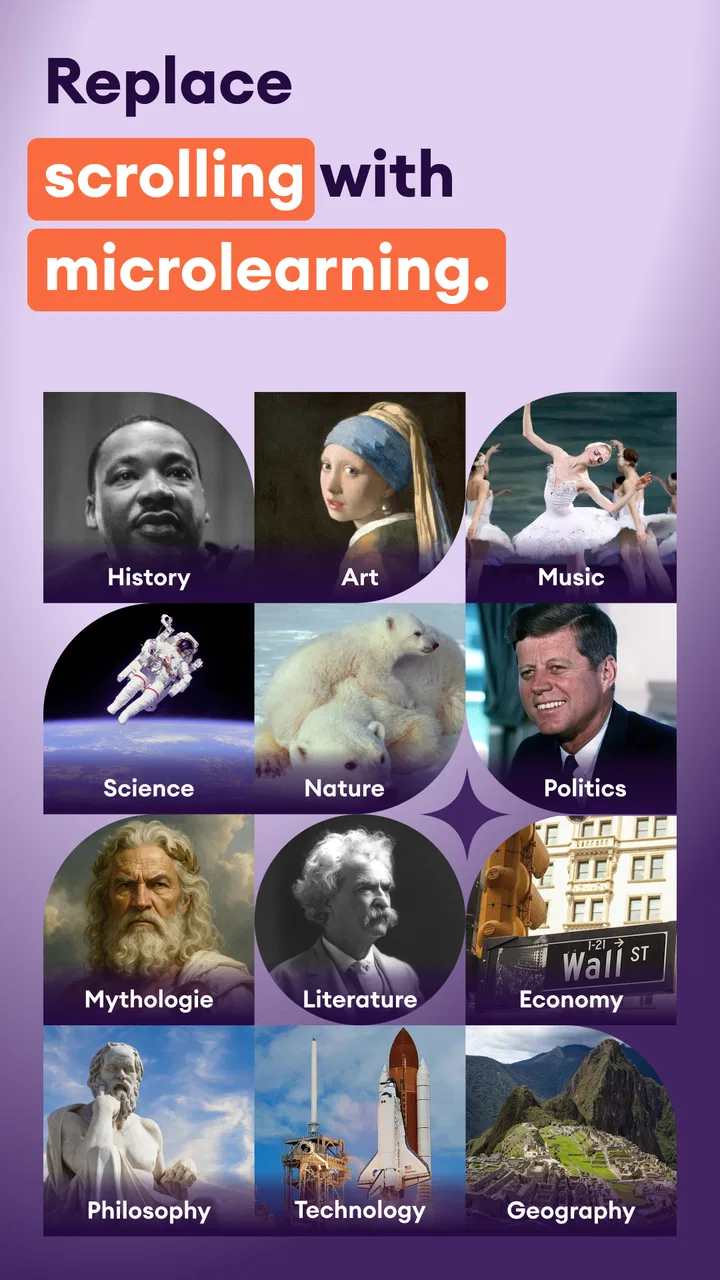
I see Yuno as a well-focused education app for people who want general knowledge to become part of everyday life. Its strongest feature is not a complicated toolset but the low barrier between opening the app and hearing something worth thinking about. That simplicity is valuable when my schedule is fragmented and my motivation is inconsistent.
I would recommend starting with a modest routine: choose one dependable listening window, keep notifications useful rather than intrusive, and follow only the topics that genuinely raise questions. Use replay or a quick note when something matters, and move to a deeper source when accuracy or mastery is required. These habits make the broad format feel purposeful instead of random.
The app is free, rated for Everyone, and supported by Gaiali GmbH, with its release dating back to October 31, 2021. Its established presence and strong average rating make it easy to try, but the right decision still depends on how you learn. If you want a structured syllabus, formal testing, or detailed references, another education tool will serve you better.
For me, the best reason to keep it installed is that it makes curiosity practical. I do not need to reserve an evening or prepare a study plan. I can listen during a small pause, carry one idea into the rest of the day, and decide whether it deserves deeper attention. That is a modest promise, but Yuno delivers it well when I use it as a daily doorway into knowledge rather than pretending it is the whole library.
FAQs for Yuno - General knowledge
01What is Yuno and how does it enhance general knowledge?
Yuno is an engaging app designed to boost your general knowledge through interactive quizzes and educational content. It covers a wide range of topics, from history and science to pop culture and current events. By offering a fun and interactive learning experience, Yuno helps users stay informed and intellectually stimulated, making learning both enjoyable and effective.
02Is Yuno suitable for all age groups?
Yes, Yuno is designed to cater to a broad audience, making it suitable for various age groups. The app offers different difficulty levels, ensuring that both young learners and adults can find content tailored to their knowledge level. Parents can feel confident that Yuno provides educational value while being entertaining and age-appropriate.
03Does Yuno require an internet connection to function?
While Yuno offers a range of offline features, such as pre-downloaded quizzes and content, an internet connection is necessary for accessing the latest updates, leaderboards, and community interactions. This ensures users have the most current information and can fully enjoy the app’s interactive features.
04Are there any in-app purchases or ads in Yuno?
Yuno is free to download, but it does offer in-app purchases for additional content and features, such as premium quizzes and ad-free experiences. The free version includes ads; however, they are non-intrusive and do not significantly disrupt the user experience. Users can choose to upgrade for a more seamless experience.
05How does Yuno ensure content accuracy and reliability?
Yuno collaborates with subject matter experts and educators to create and verify its content, ensuring accuracy and reliability. The app regularly updates its database to reflect the latest information and research. Feedback mechanisms also allow users to report any discrepancies, which are promptly reviewed and corrected by the Yuno team.
Pros
- Engaging quizzes boost learning.
- Wide range of topics covered.
- Interactive user interface.
- Regularly updated content.
- Offline mode available for quizzes.
Cons
- Some ads can be intrusive.
- Limited free content access.
- Occasional app crashes reported.
- Requires a stable internet connection.
- Profile customization is minimal.

Yuno - General knowledge
Gallery